
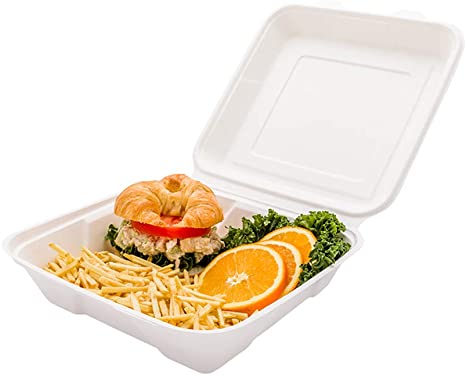
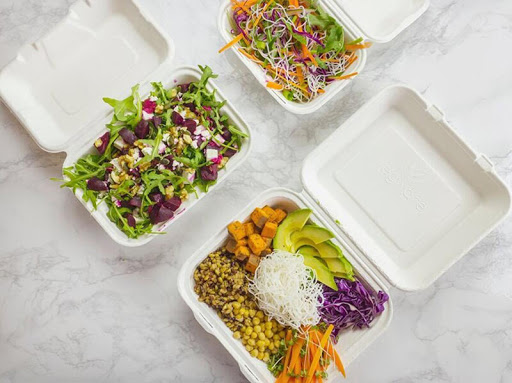
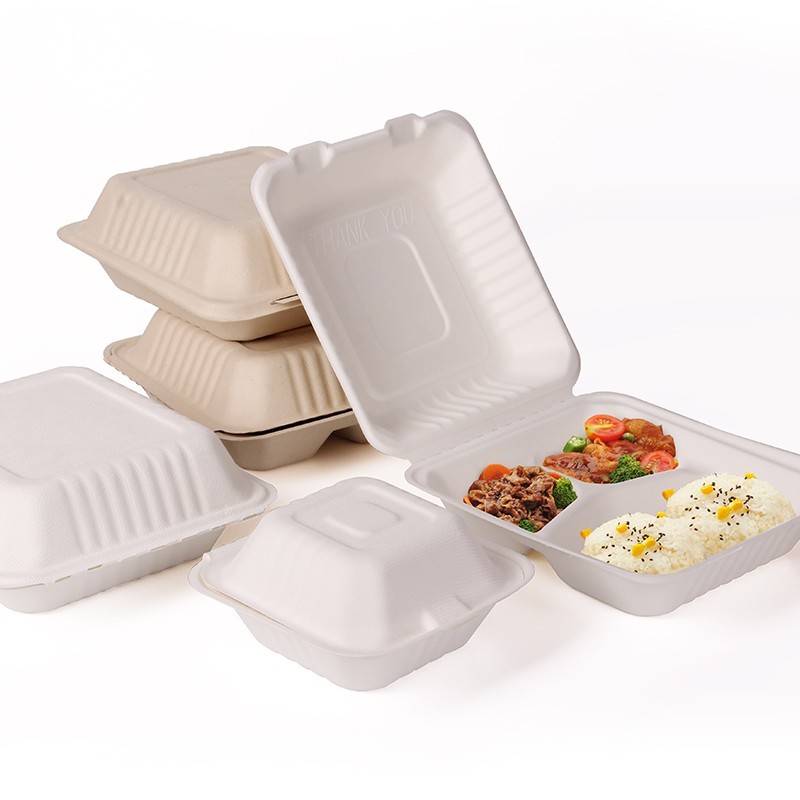
Whether a fibre clamshell can be reheated depends on the dish, the duration and the equipment, not on a single label. This page explains what we ask before answering that question, and what a kitchen can test for itself.
Why we ask about wattage
Domestic microwaves differ widely in output, so the same box and the same portion can behave differently in two kitchens. A short reheat at moderate power and a long one at high power put very different demands on a fibre wall. When you tell us the equipment, the portion weight and the intended duration, we can say whether the combination is sensible rather than guessing at it.
Duration and stirring, not a rating
Most reheating failures come from uneven heat rather than from the material. A box heated for two minutes, stirred and finished for one more performs better than one blasted for four. Sauces that spit concentrate heat at the rim. Staff should never reheat an empty box, and should not leave a loaded box in a switched-off oven where residual heat keeps working on the fibre.
Dry dishes and wet dishes
A dry dish — rice, pasta, a pastry — behaves differently from a wet one. Wet dishes release steam, which passes through the porous wall; dry ones can dry out further and stiffen. Covering a dry portion with a splash of water or a lid held slightly open usually does more for the result than changing the box. Tell us which category your menu falls into.
Test before a menu launch
The only reliable test is your own: one portion, your oven, your timing. Run it three times, note whether the base stays flat and whether the rim distorts, then decide. If a dish needs a longer reheat than the box tolerates, the answer is usually a different format, such as a paper bowl, rather than a heavier moulding. Write the result on the menu spec sheet for the next site.
Questions buyers ask
Can you confirm the box can be reheated? We do not publish a blanket claim; we confirm suitability against the dish and routine you describe.
Does printing survive reheating? Tell us the reheat conditions and we will advise on artwork placement.
Which sizes are most often reheated? The 900ml and 1200ml bodies, usually for rice and pasta dishes.
Read the materials guide or describe your reheat routine.
| Item No. | Product Name | Weight(g) | Size (mm) | Pack | Carton (cm) |
|---|---|---|---|---|---|
| MG-P-HB06 | 6″ Hamburger Box | 21 | 152*152*H76 | 125*4 | 46.5*32.5*32.3 |
| MG-B006 | 450ml Clamshell | 15 | 173*124*H53 | 50*6 | 32.5*27*37.5 |
| MG-B004 | 600ml Clamshell | 20 | 182*136*H68 | 150*4 | 64*29.5*39 |
| MG-P-SH75 | 7*5″ Clamshell | 18 | 178*128*H67 | 100*2 | 39*27*20 |
| MG-P-SH89 | 9*6*3″ Clamshell (900ml) | 30 | 228*153*H80 | 125*2 | 46*32.5*25.5 |
| MG-P-SH02−2 | 2−Compt Clamshell | 30 | 230*153*H80 | 125*2 | 44.5*34*25.5 |
| MG-P-SH08 | 8″ Clamshell (1200ml) | 37 | 220*203*H76 | 100*2 | 46*36.5*22.5 |
| MG-P-SH08−3 | 8″ 3−Compt Clamshell | 37 | 220*203*H76 | 100*2 | 46*36.5*22.5 |
| MG-P-SH09 | 9″ Clamshell (1500ml) | 42 | 228*228*H76 | 100*2 | 48*36*25.5 |
| MG-P-SH09−3 | 9″ 3−Compt Clamshell | 42 | 228*228*H77 | 100*2 | 48*36.5*25.5 |
| MG-F&C-S | Fish and Chips Box-Small | 20 | 300*191*H36.3 | 125*2 | 42*31.5*21.5 |
| MG-F&C-M | Fish and Chips Box-Middle | 33 | 310*239*H35.6 | 125*2 | 44.5*32.5*27.5 |
| MG-F&C-L | Fish and Chips Box-Large | 44 | 324*155*H60 | 125*2 | 56*31.5*21.5 |