

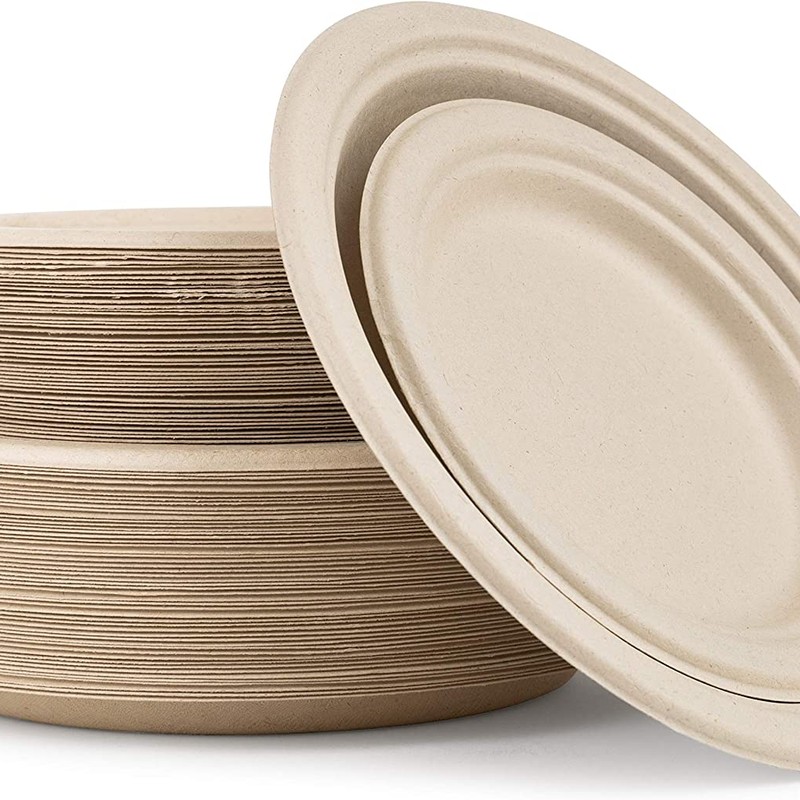
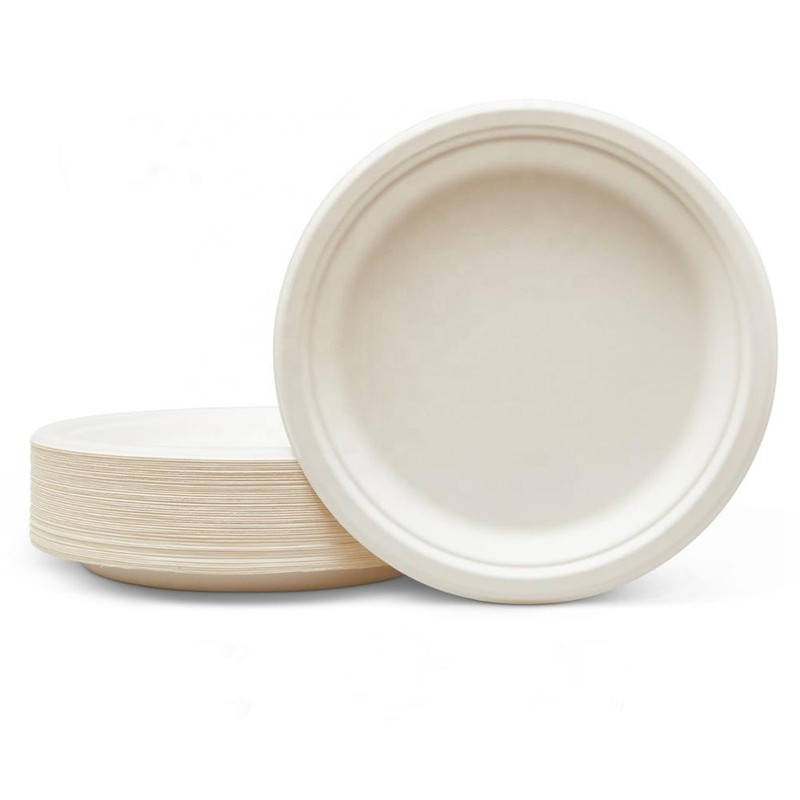
Strength in a moulded plate is not one number. It is the weight of the body, the shape of the rim and the flatness of the base working together, and the range runs from 6.7g to 28g across thirteen mouldings.
Reading the weight column
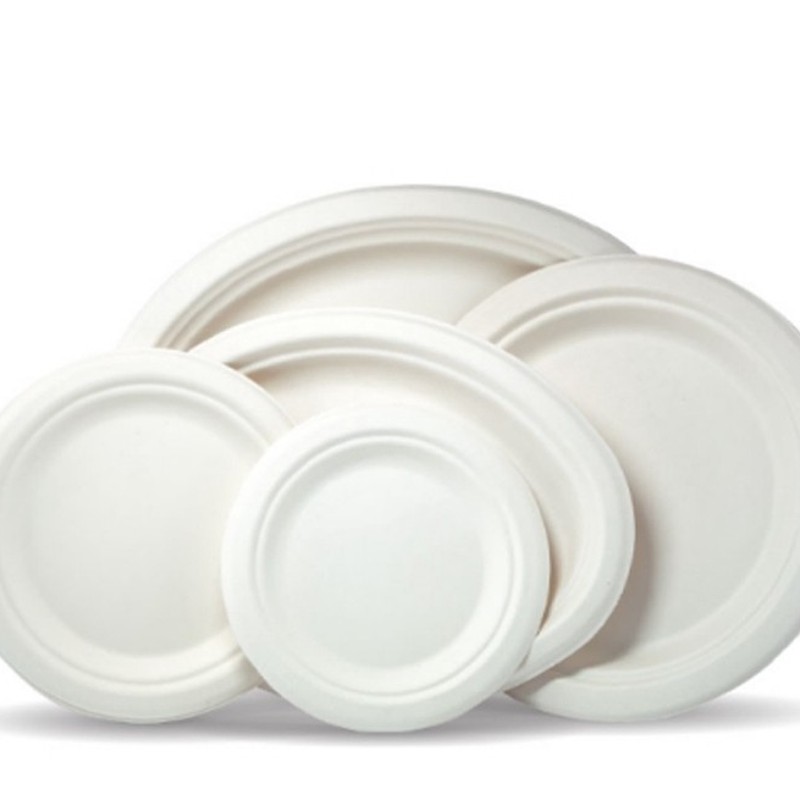
The 155mm round is 6.7g, the 176mm is 8.5g, the 197mm is 13g, the 225mm is 15g, the 254mm is 21g. Squares run heavier for their width: 12g at 160mm, 18g at 200mm, 28g at 260mm. Each step up in diameter adds material because the span between rim and centre grows, and a wider span flexes more under the same load.
Where flex actually starts
A plate bends first at the rim, not the centre. Load the middle and the edge lifts; press the edge and the middle dips. That is why the rim profile matters as much as the weight: a rolled rim on a 15g plate resists bending better than a flat edge on a heavier one. On a buffet, the plate that survives being picked up by one side is the one with the deeper rim.
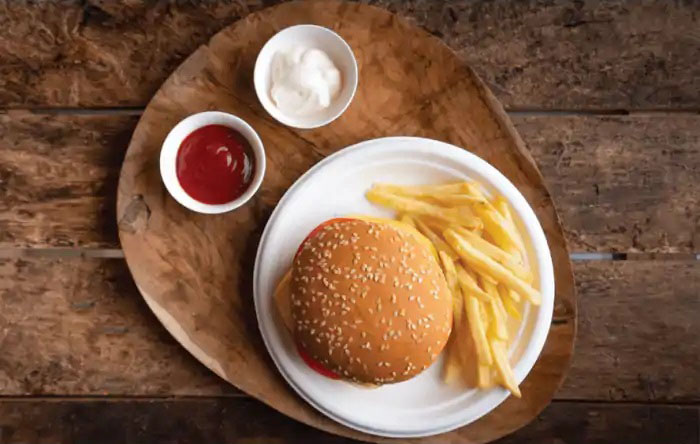
Matching weight to dish
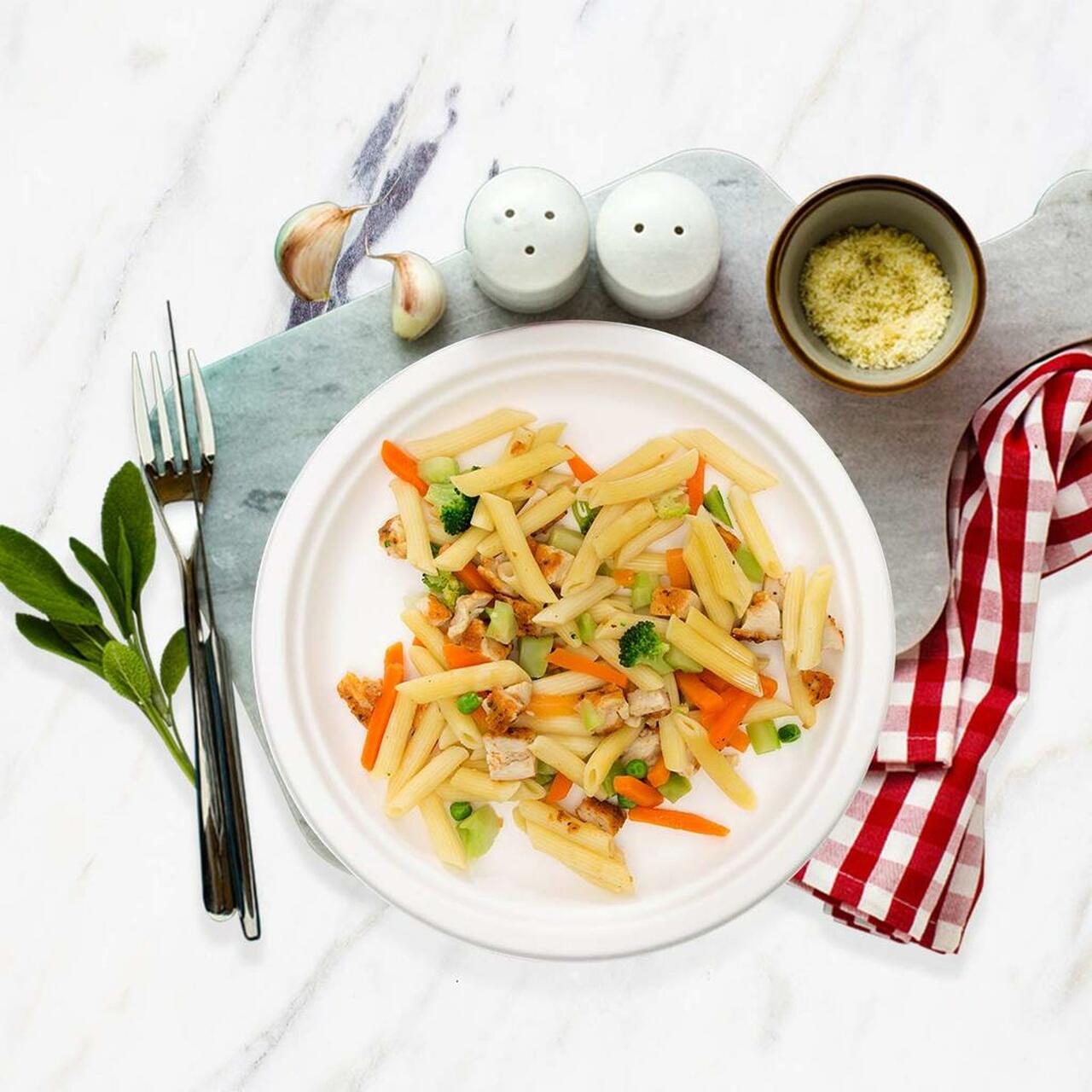
A canape or a slice of cake needs nothing beyond the 6.7g plate. A burger and fries wants the 13g or 18g body. A carvery portion with gravy wants 21g at 254mm, or 27g on the big oval. Over-specifying wastes material and freight; under-specifying produces the bend customers remember. Tell us the dish and we will match the moulding. Material behaviour is explained in the materials guide.
Squares carry differently
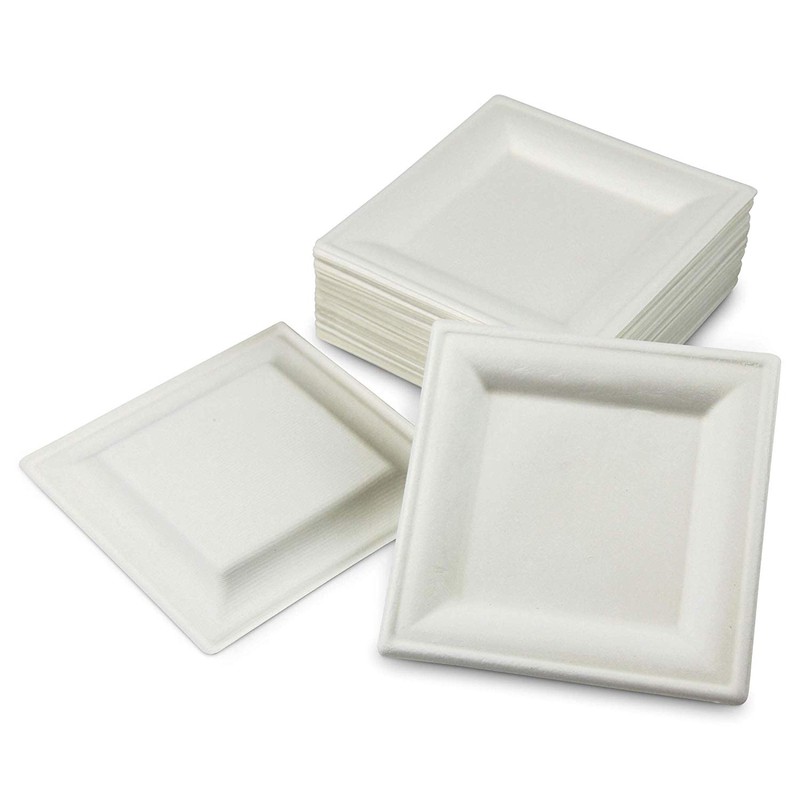
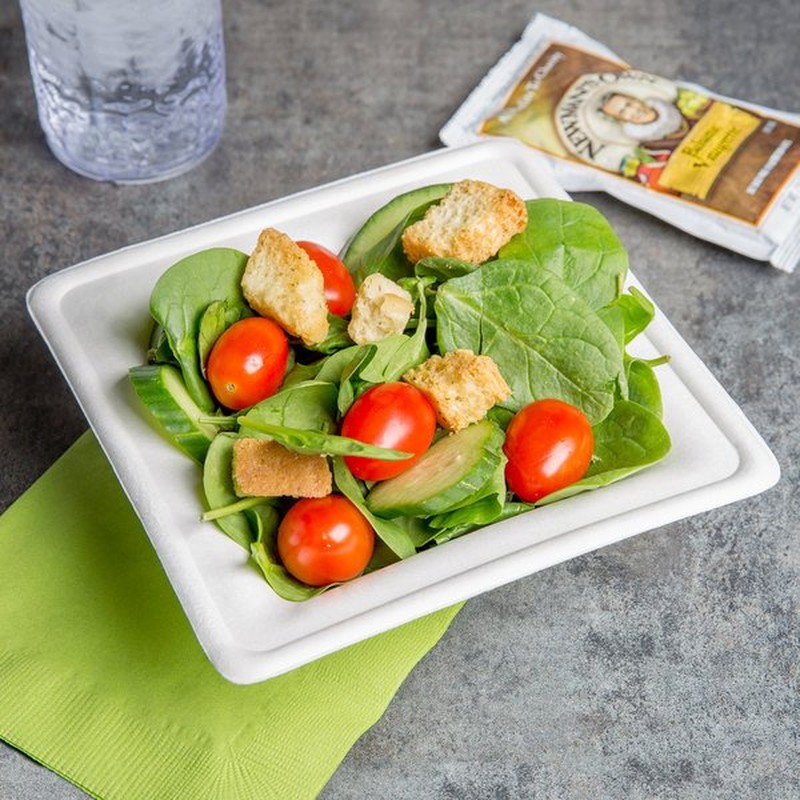
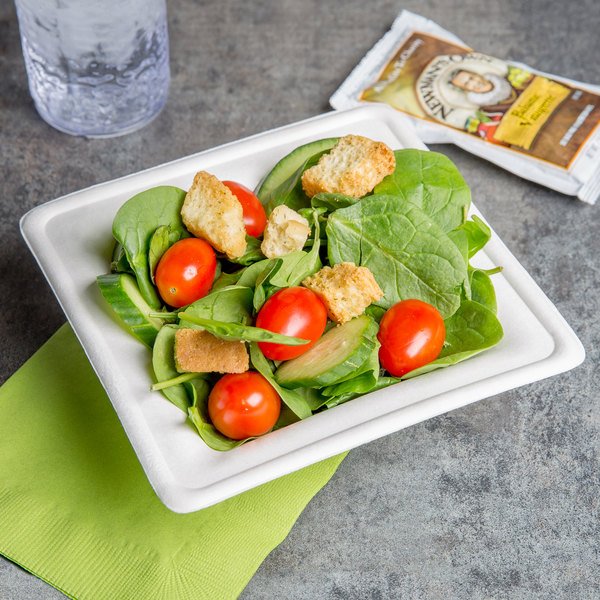
A square plate at 200mm spans less than a 225mm round across the diagonal, yet it weighs 18g against 15g. The extra material sits in the corners, which is where a square plate takes load when carried by one edge. That makes squares the sturdier choice for boards, trays and buffet service, where plates are moved full rather than eaten from in place.
Questions buyers ask
Which is the strongest plate in the range? The 260mm square at 28g is the heaviest moulding; whether it suits you depends on the dish.
Can you test a plate against our portion? Send the portion description and we will advise on the closest match.
Does a heavier plate change freight? Weight and carton cube both move with size, so the answer depends on the size mix.
Compare diameters in the size guide or describe the load.
| Item No. | Product Name | Weight(g) | Size (mm) | Pack | Carton (cm) |
|---|---|---|---|---|---|
| MG-YP06 | 6″ Round Plate | 6.7 | Φ155*H15 | 125*8 | 33*28*33.3 |
| MG-YP07 | 7″ Round Plate | 8.5 | Φ176*H16 | 125*8 | 36.8*31*37.5 |
| MG-YP08 | 8″ Round Plate | 13 | Φ197*H19.6 | 125*4 | 43*34.5*23 |
| MG-YP09 | 9″ Round Plate | 15 | Φ225*20 | 125*4 | 46.5*34.8*24.8 |
| MG-YP10 | 10″ Round Plate | 21 | Φ254*H20 | 125*4 | 53.5*35*28 |
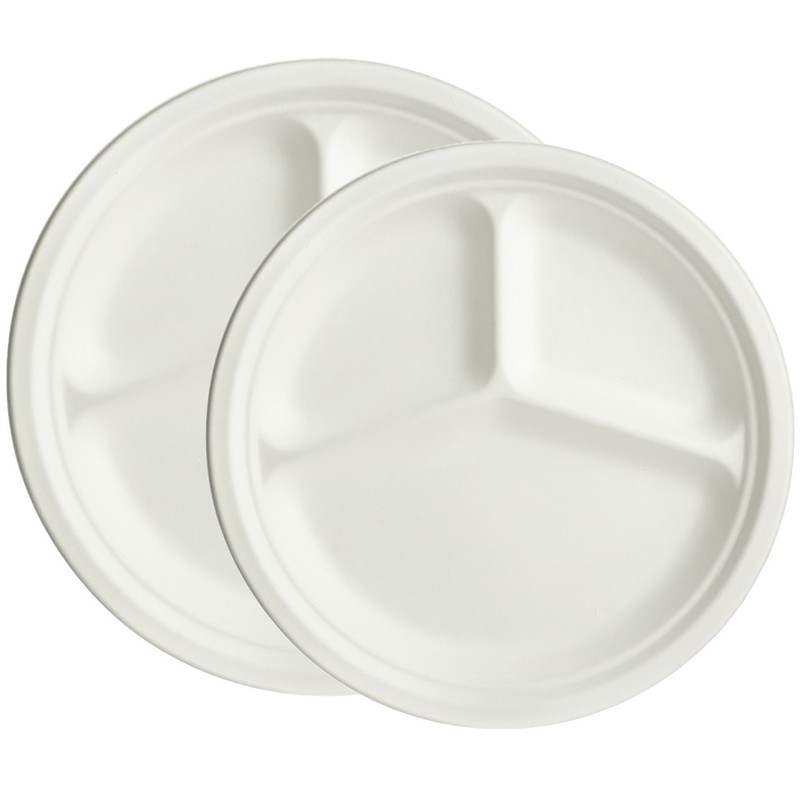
| MG-YP09−2 | 9″ 2−Compt Round Plate | 15 | Φ225*H20 | 125*4 | 46.3*36.5*24.8 |
| MG-YP09−3 | 9″ 3−Compt Round Plate | 15 | Φ225*H20 | 125*4 | 46.5*23.5*35.5 |
| MG-YP10−3 | 10″ 3−Compt Round Plate | 21 | Φ254*H20 | 125*4 | 53.5*35*28 |
| MG-TY02 | Small Oval Plate | 17 | 259*192*H25 | 125*4 | 39.8*27.5*44.5 |
| MG-TY03 | Big Oval Plate | 27 | 317*252*H25 | 125*4 | 35.5*33*53 |
| MG-FP06 | 6″ Square Plate | 12 | 160*160*16 | 125*4 | 35.5*31*19.5 |
| MG-FP08 | 8″ Square Plate | 18 | 200*200*16 | 125*4 | 43.5*33.5*23.5 |
| MG-FP10 | 10″ Square Plate | 28 | 260*260*20 | 125*4 | 54*30*29 |